Duck Breast with Pomegranate Glaze
Highlighted under: Everyday World Food Collection
I’ve always been drawn to the rich and indulgent flavors of duck, and this Duck Breast with Pomegranate Glaze has quickly become one of my favorites. The combination of the crispy skin and tender meat, paired with a vibrant pomegranate glaze, creates a dish that feels both luxurious and comforting. It’s a recipe that’s surprisingly easy to master and perfect for impressing guests or treating yourself on a special occasion. I can’t wait to share it with you all!
When I first experimented with duck breast, I was amazed at how versatile and flavorful it is. I decided to pair it with a sweet and tangy pomegranate glaze, which elevates the dish to a whole new level. The glaze caramelizes beautifully, adding a delightful shine and depth of flavor.
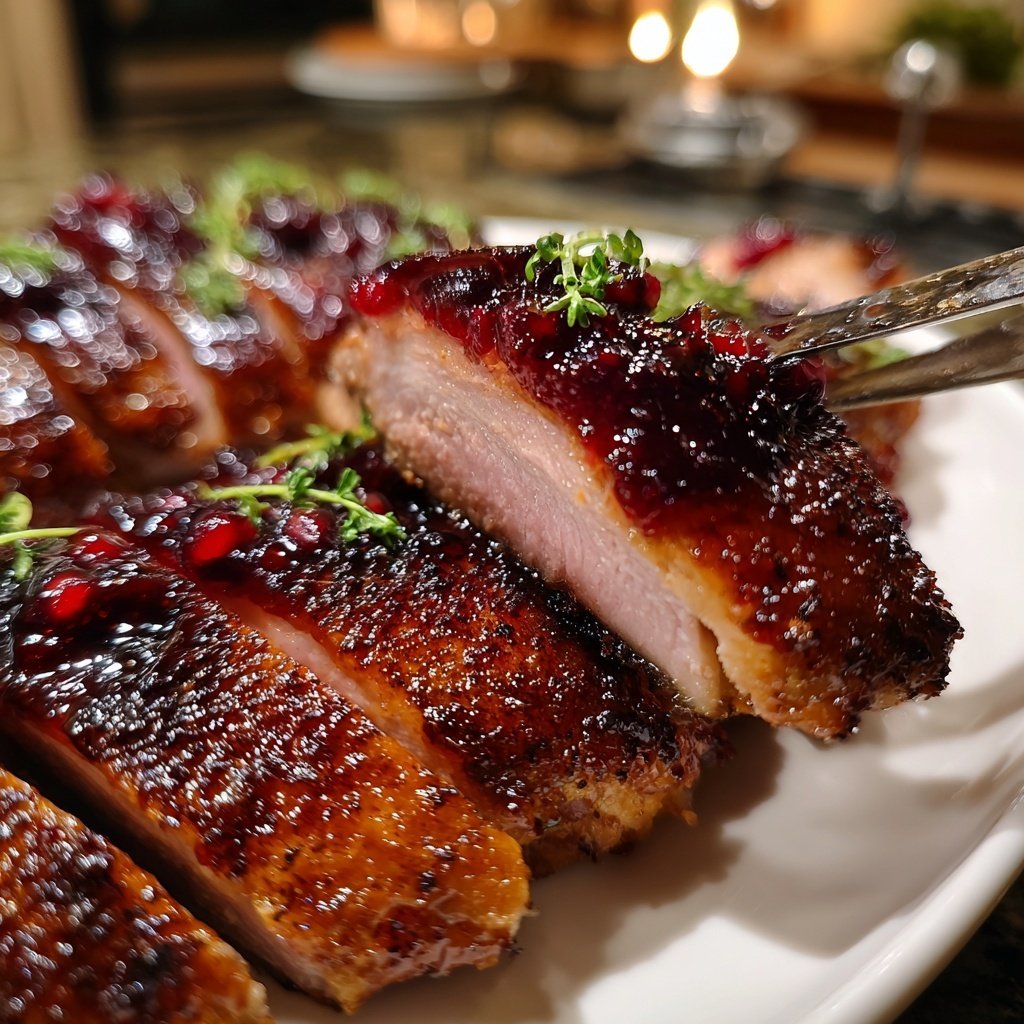
I found that searing the duck breast skin-side down first is key to achieving that crispy texture. It’s a simple technique that makes a world of difference. And honestly, the pop of pomegranate seeds not only looks stunning but adds a burst of freshness that complements the richness of the duck perfectly.
Why You'll Love This Recipe
- Succulent duck breast with crispy skin
- Sweet and tangy pomegranate glaze that enhances every bite
- A sophisticated dish that is surprisingly easy to prepare
Mastering the Duck Breast
To achieve perfectly cooked duck breast, start with a cold skillet as this helps render the fat more efficiently. Cooking the duck skin-side down over medium heat allows the fat to drip away and crisp the skin beautifully. Ideally, the skin should turn a deep golden brown, which usually takes about 8-10 minutes. If the skin is browning too quickly, reduce the heat slightly to avoid burning and ensure even cooking.
After flipping the duck breast, I recommend using a meat thermometer to check for doneness. Duck breast is best served medium-rare at 135°F (57°C). If you prefer it more cooked, continue to cook until it reaches a temperature of 145°F (63°C). Let the duck rest for a few minutes post-cooking; this allows the juices to redistribute, keeping the meat tender and succulent.
Crafting the Pomegranate Glaze
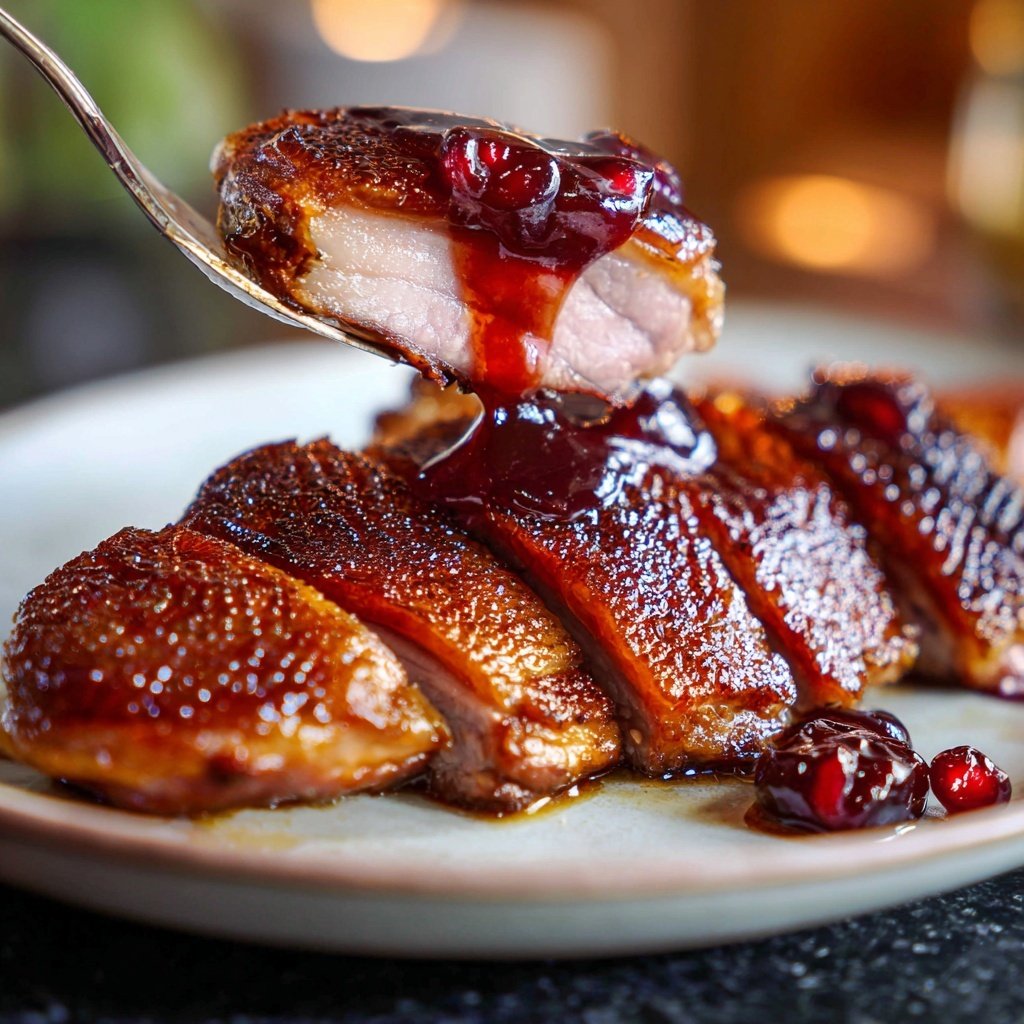
The pomegranate glaze is the star of this dish, providing a sweet and tangy contrast to the rich duck. When making the glaze, allow it to reduce gently over medium heat for the best flavor concentration. Be attentive during the simmering process, as you want it to thicken and reach a syrupy consistency without boiling over. The whole process should take about 10 minutes, but keep an eye on it to avoid burning.
If you're unable to find pomegranate juice, cranberry juice can be a suitable substitute, though it may result in a different flavor profile. Additionally, you can enhance the glaze with a touch of fresh pomegranate seeds or a dash of citrus zest for added brightness. This glaze can also be made a day ahead and stored in the fridge; simply reheat gently before serving.
Ingredients
Ingredients
For the Duck
- 2 duck breasts
- Salt and pepper, to taste
For the Pomegranate Glaze
- 1 cup pomegranate juice
- 2 tablespoons honey
- 1 tablespoon balsamic vinegar
- 1 teaspoon cornstarch mixed with 1 tablespoon water
Instructions
Cooking Instructions
Prepare the Duck Breasts
Score the skin of the duck breasts in a criss-cross pattern, being careful not to cut into the meat. Season both sides with salt and pepper.
Sear the Duck
Place the duck breasts skin-side down in a cold skillet. Turn the heat to medium and allow the fat to render slowly, cooking for about 8-10 minutes until the skin is crispy. Flip and cook for another 5-7 minutes to your desired doneness.
Make the Glaze
In a saucepan, combine pomegranate juice, honey, and balsamic vinegar. Bring to a boil, then reduce the heat and simmer until it thickens, about 10 minutes. Stir in the cornstarch mixture and cook until glossy.
Serve
Slice the duck breast and drizzle with pomegranate glaze. Garnish with fresh pomegranate seeds if desired.
Pro Tips
- Let the duck rest for a few minutes after cooking to allow the juices to redistribute for maximum tenderness.
Serving Suggestions
This Duck Breast with Pomegranate Glaze pairs beautifully with a variety of sides. Consider serving it alongside creamy mashed potatoes or roasted Brussels sprouts, which complement the richness of the duck. The tartness of the pomegranate also contrasts nicely with a simple arugula salad dressed in lemon vinaigrette for a fresh touch on the plate.
For a more festive presentation, arrange slices of the duck breast fanned out on a platter, drizzling the glaze over the top. Garnishing with fresh pomegranate seeds not only adds visual appeal but also a burst of flavor. This makes it an elegant choice for entertaining guests or celebrating special occasions.
Make-Ahead and Storage Tips
If you plan to prepare this dish ahead of time, I recommend cooking the duck breasts in advance and refrigerating them once cooled. To reheat, slice the duck and gently warm it in a skillet over low heat, adding a bit of water or broth to maintain moisture. Avoid high heat to prevent the meat from drying out and the skin from losing its crispiness.
The pomegranate glaze can be made several days in advance, stored in an airtight container in the refrigerator. When you're ready to serve, simply reheat the glaze on the stovetop to bring it back to its glossy consistency. This not only saves time on the day of serving but also allows the flavors to meld together even more.
Questions About Recipes
→ Can I use frozen duck breasts?
Yes, but make sure to thaw them completely before cooking to ensure even cooking.
→ What can I serve with this dish?
This dish pairs beautifully with roasted vegetables or a simple green salad.
→ Can I make the glaze ahead of time?
Absolutely! You can prepare the glaze a day in advance and store it in the refrigerator.
→ What’s the best way to store leftovers?
Store any leftovers in an airtight container in the refrigerator for up to 2 days. Reheat gently to avoid drying out the duck.
Duck Breast with Pomegranate Glaze
Created by: Matilda Rowe
Recipe Type: Everyday World Food Collection
Skill Level: Intermediate
Final Quantity: 2 servings
What You'll Need
For the Duck
- 2 duck breasts
- Salt and pepper, to taste
For the Pomegranate Glaze
- 1 cup pomegranate juice
- 2 tablespoons honey
- 1 tablespoon balsamic vinegar
- 1 teaspoon cornstarch mixed with 1 tablespoon water
How-To Steps
Score the skin of the duck breasts in a criss-cross pattern, being careful not to cut into the meat. Season both sides with salt and pepper.
Place the duck breasts skin-side down in a cold skillet. Turn the heat to medium and allow the fat to render slowly, cooking for about 8-10 minutes until the skin is crispy. Flip and cook for another 5-7 minutes to your desired doneness.
In a saucepan, combine pomegranate juice, honey, and balsamic vinegar. Bring to a boil, then reduce the heat and simmer until it thickens, about 10 minutes. Stir in the cornstarch mixture and cook until glossy.
Slice the duck breast and drizzle with pomegranate glaze. Garnish with fresh pomegranate seeds if desired.
Extra Tips
- Let the duck rest for a few minutes after cooking to allow the juices to redistribute for maximum tenderness.
Nutritional Breakdown (Per Serving)
- Calories: 420 kcal
- Total Fat: 28g
- Saturated Fat: 12g
- Cholesterol: 90mg
- Sodium: 200mg
- Total Carbohydrates: 8g
- Dietary Fiber: 0g
- Sugars: 6g
- Protein: 30g