Korean Bibimbap
Highlighted under: Everyday World Food Collection
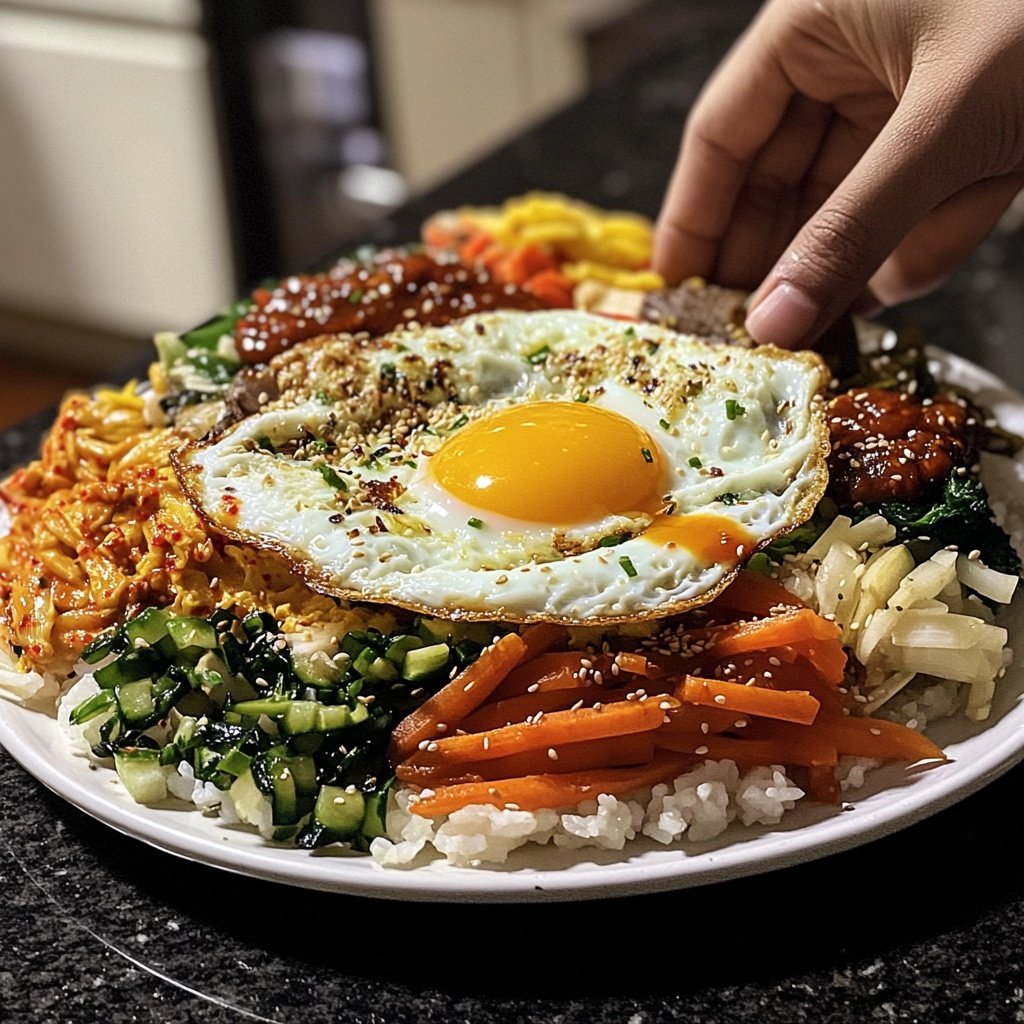
Korean Bibimbap is a colorful and nutritious dish that combines rice with a variety of vegetables and proteins, topped with a fried egg and spicy gochujang sauce.
Korean Bibimbap is more than just a meal; it's a vibrant medley of flavors and textures that represents the harmony of Korean cuisine. Originating from Korea, this dish has gained popularity worldwide for its delicious taste and healthy ingredients. Each bowl is a canvas, allowing you to customize it to your liking!
Why You'll Love This Recipe
- A beautiful presentation that excites the senses
- Packed with fresh vegetables and wholesome ingredients
- Perfect balance of flavors with spicy and savory notes
The Essence of Bibimbap
Bibimbap is more than just a meal; it’s a celebration of flavors, colors, and textures. Originating from Korea, this dish embodies the philosophy of balancing different food groups, making it not only visually appealing but also nutritionally rich. Each ingredient serves a purpose, contributing to a harmonious blend that excites the palate.
The core of bibimbap is rice, which acts as the canvas for an array of vibrant vegetables, proteins, and a spicy kick from gochujang. Traditionally, it’s prepared in a hot stone bowl, allowing the rice to develop a crispy texture at the bottom, enhancing the overall experience. This dish can be easily customized, making it perfect for various dietary preferences.
Customizing Your Bibimbap
One of the best aspects of bibimbap is its versatility. You can easily modify the ingredients based on what you have at home or your dietary needs. For a vegetarian version, simply omit the eggs or replace them with tofu. If you’re looking for added protein, grilled chicken or beef can be excellent additions.
Feel free to experiment with different vegetables. Seasonal produce can add unique flavors; think bell peppers, kale, or even radishes. The key is to ensure that the veggies are cooked to the perfect tenderness without losing their vibrant colors, keeping the dish visually stunning and delicious.
Tips for the Perfect Bibimbap
To ensure a successful bibimbap, preparation is key. Blanching vegetables briefly helps retain their color and nutrients. When sautéing, keep the heat at medium to avoid overcooking. Each vegetable should be seasoned lightly to enhance its natural flavor without overpowering the dish.
When it comes to serving, don’t be shy with the gochujang! This spicy paste is essential for that authentic Korean taste. Adjust the amount based on your spice tolerance, and remember to mix everything together just before eating to evenly distribute the flavors. Enjoy the delightful combination of textures and tastes that make bibimbap a beloved dish worldwide.
Ingredients
For the Bibimbap
- 2 cups cooked white rice
- 1 cup spinach, blanched
- 1 cup bean sprouts, blanched
- 1 small carrot, julienned
- 1 small zucchini, julienned
- 1 cup shiitake mushrooms, sliced
- 4 eggs
- 4 tablespoons gochujang (Korean chili paste)
- 2 tablespoons sesame oil
- Sesame seeds for garnish
- Green onions, chopped for garnish
Instructions
Prepare the Vegetables
In a skillet, heat 1 tablespoon of sesame oil over medium heat. Sauté each vegetable (spinach, bean sprouts, carrot, zucchini, mushrooms) separately until tender. Season each with a pinch of salt. Set aside.
Cook the Eggs
In the same skillet, add a little more sesame oil and fry the eggs sunny-side up until the whites are set but the yolks are still runny.
Assemble the Bibimbap
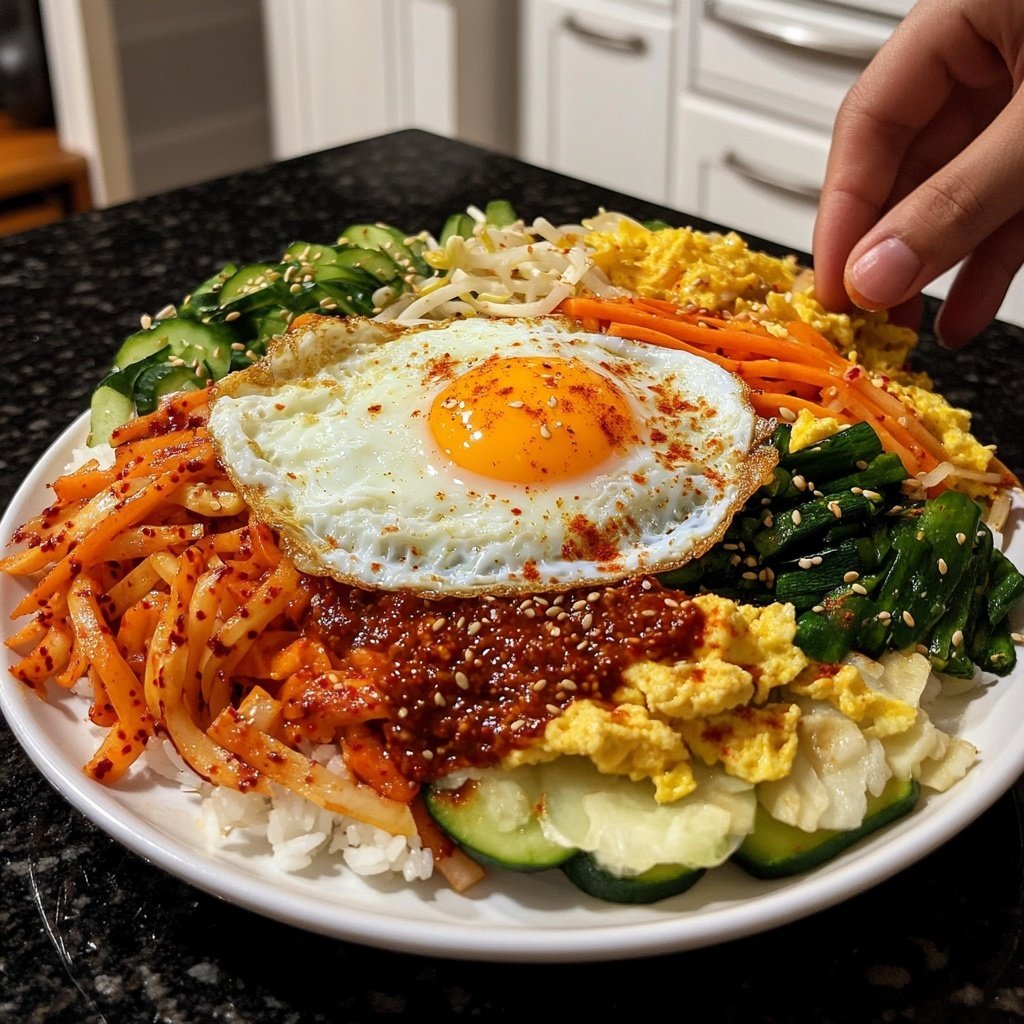
In a bowl, place a serving of rice at the bottom. Arrange the sautéed vegetables and fried egg on top in a colorful manner. Drizzle with gochujang and a little more sesame oil.
Serve
Garnish with sesame seeds and chopped green onions. Mix everything together before eating to enjoy the flavors!
Pro Tips
For added protein, you can include marinated beef or tofu. Adjust the amount of gochujang to suit your spice preference.
Nutritional Benefits
Korean bibimbap is not just a feast for the eyes; it’s also a powerhouse of nutrition. Packed with vitamins and minerals from the variety of vegetables, it provides essential nutrients that support overall health. Spinach, for instance, is rich in iron and vitamins A and C, while carrots offer a healthy dose of beta-carotene.
The inclusion of healthy fats from sesame oil and the protein boost from eggs or tofu further enhances its nutritional profile. This makes bibimbap a well-rounded meal that can fuel your body while satisfying your taste buds.
Serving Suggestions
Bibimbap can be served as a main dish or as a side, depending on your meal plans. Pair it with a side of kimchi for a traditional touch that adds depth and tanginess to your meal. You can also serve it with a refreshing cucumber salad to balance the richness of the bibimbap.
For a delightful twist, consider adding a drizzle of sesame dressing or a sprinkle of crushed seaweed on top. This can enhance the umami flavor and add an extra layer of texture, making your bibimbap experience even more enjoyable.
Questions About Recipes
→ Can I make Bibimbap ahead of time?
Yes, you can prepare the vegetables and rice ahead of time. Just assemble and serve with a fresh egg right before eating.
→ What can I substitute for gochujang?
You can use sriracha or a mix of chili powder and soy sauce for a different flavor, but it will not be as authentic.
→ Is Bibimbap vegetarian-friendly?
Absolutely! You can make a completely vegetarian version by omitting meat and adding more vegetables.
→ Can I freeze Bibimbap?
While you can freeze the rice and vegetables separately, it's best to serve Bibimbap fresh for optimal taste and texture.
Korean Bibimbap
Created by: Matilda Rowe
Recipe Type: Everyday World Food Collection
Skill Level: Intermediate
Final Quantity: 4 servings
What You'll Need
For the Bibimbap
- 2 cups cooked white rice
- 1 cup spinach, blanched
- 1 cup bean sprouts, blanched
- 1 small carrot, julienned
- 1 small zucchini, julienned
- 1 cup shiitake mushrooms, sliced
- 4 eggs
- 4 tablespoons gochujang (Korean chili paste)
- 2 tablespoons sesame oil
- Sesame seeds for garnish
- Green onions, chopped for garnish
How-To Steps
In a skillet, heat 1 tablespoon of sesame oil over medium heat. Sauté each vegetable (spinach, bean sprouts, carrot, zucchini, mushrooms) separately until tender. Season each with a pinch of salt. Set aside.
In the same skillet, add a little more sesame oil and fry the eggs sunny-side up until the whites are set but the yolks are still runny.
In a bowl, place a serving of rice at the bottom. Arrange the sautéed vegetables and fried egg on top in a colorful manner. Drizzle with gochujang and a little more sesame oil.
Garnish with sesame seeds and chopped green onions. Mix everything together before eating to enjoy the flavors!
Extra Tips
For added protein, you can include marinated beef or tofu. Adjust the amount of gochujang to suit your spice preference.
Nutritional Breakdown (Per Serving)
- Calories: 550 kcal
- Total Fat: 25g
- Saturated Fat: 5g
- Cholesterol: 186mg
- Sodium: 720mg
- Total Carbohydrates: 70g
- Dietary Fiber: 6g
- Sugars: 5g
- Protein: 18g